HMFKIP UNIPMA Holds Traditional Dance Competition, Attracts 33 Participants
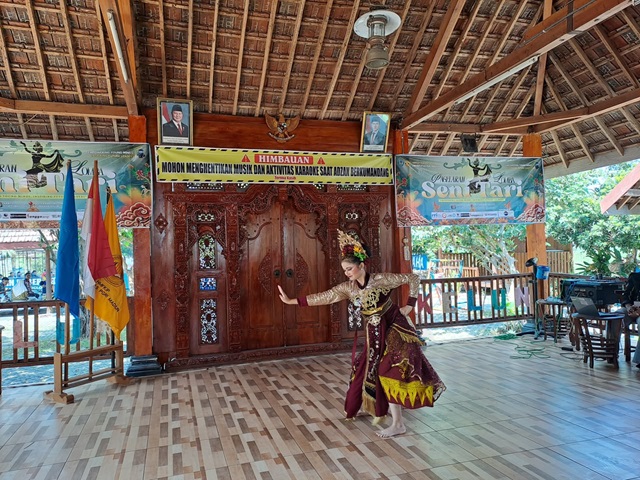
UNIPMA — The Student Association of the Faculty of Teacher Training and Education (HMFKIP) at Universitas PGRI Madiun (UNIPMA) held a traditional dance competition for young people at Joglo Palereman Kelun, Madiun City, on Saturday (October 3). A total of 33 participants aged 15 to 20 took part in the competition, which served as a platform to develop their talents while reintroducing traditional arts to the younger generation.
Carrying the theme “Empowering Young Minds Inspiring Future Leaders,” the competition was open to the general public in the traditional dance category. Participants were allowed to perform creative dance pieces, provided that they retained traditional elements in their performances.
The organizing committee chair, Azzahra Lailatul Hanifah, said that each participant performed individually for approximately three to seven minutes. Their performances were assessed by three judges based on four aspects: wiraga (movement), wirama (rhythm), wirasa (expression), and wirupa (appearance).
“This competition provides a platform for participants to channel their talents, preserve culture, and enhance their creativity in the field of dance,” Azzahra said.
In addition to artistic abilities, the event, organized under the Arts and Sports Division (Senor) of HMFKIP UNIPMA, was aimed at developing participants’ non-academic potential. The competition also served as a means of fostering creativity, achievement motivation, discipline, and sportsmanship.
Of the 33 participants, Zara Fatwatul Mawadah from Madiun won first place. Second place went to Zahra Angelina Marchela Fifiana from SMAN 1 Kawedanan, while Azis Muham Ariya Putra from SMK PGRI 2 Ponorogo took third place.
Meanwhile, Retno Anggraini from SMAN 1 Nglames won the first honorable mention, while Nazywa Malika Aura Purnomo, also from SMAN 1 Nglames, received the second honorable mention.
Azzahra expressed hope that the event would encourage young people to become more familiar with and appreciate traditional arts. According to her, the competition was also expected to provide participants with a space to continue creating while strengthening connections among them.
“This event is expected to serve as a platform for young people to channel their talents and develop their creativity in the field of dance,” she added.
The dance competition also supports efforts to strengthen cultural literacy through education. In addition to preserving traditional arts, the training and competition process gave participants opportunities to develop non-academic skills and gain a deeper understanding of cultural values present in society.