UNIPMA PPKn Education Study Program Assists Pelem Village Residents in Developing Aquaponics
UNIPMA—The PPKn Education Study Program of the Faculty of Teacher Training and Education (FKIP), Universitas PGRI Madiun (UNIPMA), invited residents of Pelem Village, Karangrejo District, Magetan Regency, to utilize their home gardens through aquaponics cultivation. The program is aimed at strengthening family food security while also creating business opportunities for residents.
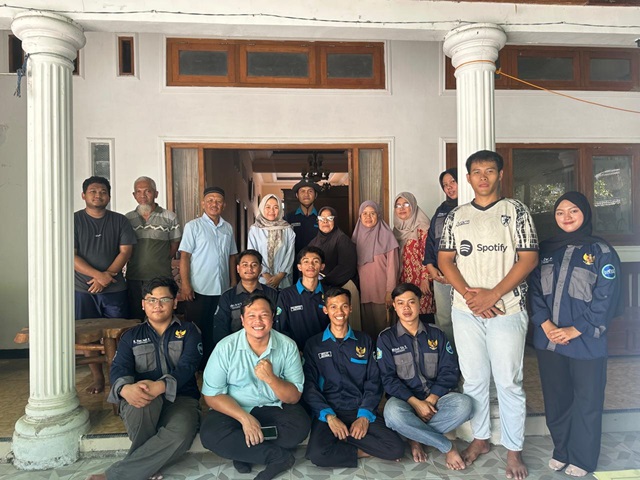
The community empowerment activity took place on September 28–29 and was initiated by the Student Association of the PPKn Education Study Program (HMPS) CIVICS FKIP UNIPMA. A total of 10 residents participated in the activity, supported by 21 students serving as the organizing committee.
Head of the PPKn Education Study Program, Dr. Yuni Harmawati, S.Pd., M.Pd., attended and delivered remarks together with supervising lecturer Dr. Maya Kartika Sari, S.Pd., M.Pd. The presence of the lecturers represented the academic community's support for student activities as well as community service.
Dr. Yuni Harmawati, S.Pd., M.Pd., said that the activity provided a space for students to directly apply the values of citizenship, leadership, and social awareness.
“This community service activity marks the beginning of the students’ journey to serve the community,” she said.
She encouraged students not only to bring programs to the community but also to learn from residents and build cooperation with them. Meanwhile, for the community, the skills gained are expected to be developed independently after the program ends.
During the activity, residents received materials on family food security, the utilization of home gardens, aquaponics techniques, and business opportunities. Participants then practiced creating a pilot aquaponics installation using a 200-liter plastic drum, PVC pipes, and a water pump.
The installation was stocked with 200 catfish fingerlings and planted with water spinach, mustard greens, and lettuce. Residents also learned how to manage water quality, select fingerlings, provide feed, and maintain the cultivation ecosystem.
One of the HMPS CIVICS members, Abdullah, said that the activity used a workshop and learning by doing method so that residents could become directly involved in the cultivation process.
“Assistance is provided both face-to-face and online so that the aquaponics management can continue to be monitored after the training,” Abdullah said.
Assistance is provided through field visits and a WhatsApp group, with monitoring conducted every two months. This approach was prepared to help residents maintain the sustainability of the installation and address challenges during the cultivation process.
The program was initiated in response to the condition of residents’ home gardens that had not been optimally utilized, as well as the need for knowledge about land- and water-efficient cultivation technology. In addition to meeting food needs, the fish and vegetables produced are also intended to be developed into economically valuable products.
One of the participants, Retno Tri Wiyarsih, appreciated the activity because it provided productive activities for residents, particularly housewives. “Hopefully, activities like this can be adopted by residents in other villages,” Retno said.
This activity also supports SDG Goal 2 on ending hunger (Zero Hunger). The program, which carries the values of “Unite, Move, and Grow Together,” is expected to serve as an initial step toward developing aquaponics cultivation and introducing it to residents in surrounding communities.