Strengthening Food Security, UNIPMA and DKP Monitor Biofloc Tilapia Farming
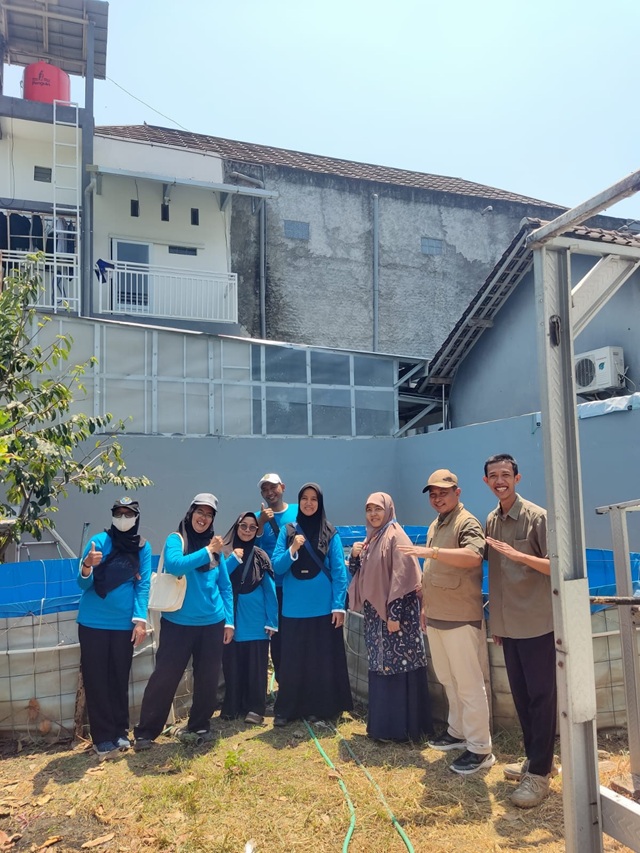
UNIPMA — Tilapia farming using a biofloc system at the Biology Garden of Universitas PGRI Madiun (UNIPMA) has entered the monitoring and evaluation stage. UNIPMA and the Madiun City Food Security Agency (DKP) inspected the facilities, biofloc installation, and fish development to ensure the grant program is being implemented properly.
The monitoring took place on Wednesday (September 16). The DKP delegation was led by drh. Cahyarini Budiarti, while UNIPMA was represented by Head of the Biology Education Study was not limited to checking the condition of the grant-funded facilities but also included technical assistance throughout the farming process. The assistance covered inspections of the biofloc installation and the growth Program Sri Utami, S.Pd., M.Pd., Head of the Laboratory Joko Widiyanto, S.Pd., M.Pd., and Zainal Arifin, S.Pd.
Cahyarini Budiarti said the monitoring was not limited to checking the condition of the grant-funded facilities but also included technical assistance throughout the farming process. The assistance covered inspections of the biofloc installation and the growth of the tilapia.
“The expectation is that the harvest will achieve optimal results and help improve the economic well-being of the group members,” she said.
The team inspected the round tarpaulin ponds to ensure there were no leaks and that the supporting structures remained in good condition. The inspection also covered the biofloc installation, including the aeration system, air pumps, and electrical components that help maintain oxygen levels and support the microorganisms that form the biofloc.
The team also identified potential challenges faced by the farmers, particularly power outages or equipment failures that could disrupt the aeration system. The development of the tilapia fingerlings was also monitored to ensure the farming process continues through to harvest.
Zainal Arifin, S.Pd., said the monitoring was aimed at assessing the condition and utilization of the biofloc facilities provided through the grant at the UNIPMA Biology Garden.
“The equipment provided is still being used for tilapia farming activities,” he said.
Sri Utami, S.Pd., M.Pd., said the assistance from DKP was useful in addressing challenges during the early stages of farming, particularly in adjusting water quality and managing feed.
The grant program includes a biofloc-based fish farming package. For UNIPMA, participation in the program is part of the university's Tri Dharma of Higher Education, particularly community service, through the utilization of the Biology Garden, facilities, and human resources.
The initiative also supports SDG 2 on zero hunger, SDG 8 on decent work and economic growth, SDG 12 on responsible consumption and production, and SDG 17 on partnerships for the goals.