Global Classroom! FH UNIPMA and NEUST Philippines’ College of Criminology Examine Environmental Regulations and the Digital Ecosystem
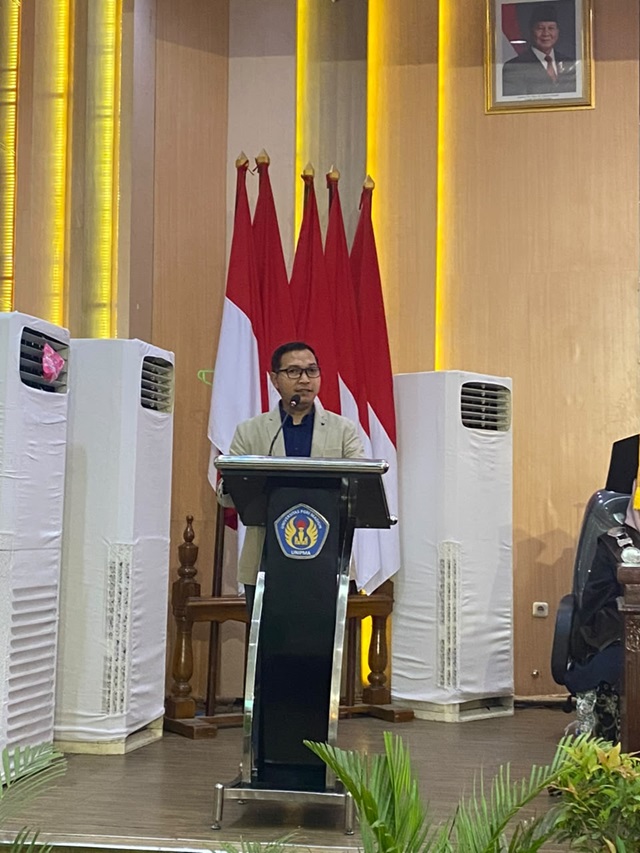
UNIPMA — The Law Study Program of the Faculty of Law (FH) at Universitas PGRI Madiun (UNIPMA) brought international legal discourse directly into the classroom through a guest lecture on comparative legal systems across countries on Wednesday, October 29. Going beyond merely inviting international academics as a symbol of cooperation, the forum, attended by 35 students, explored critical issues currently receiving global attention, ranging from environmental conservation frameworks to the challenges of criminal law enforcement in the digital era.
This strategic initiative, organized in collaboration with the International Affairs Division (Divisi Luar Negeri/DLN) of UNIPMA’s Partnership and Public Relations Bureau (Biro Kerja Sama dan Humas/BKH), reaffirmed the university’s commitment to strengthening the quality of the Three Pillars of Higher Education (Tridharma Perguruan Tinggi) through a global perspective. Through a strong partnership with the College of Criminology at Nueva Ecija University of Science and Technology (NEUST), Philippines, students were encouraged to understand that legal theories do not exist in isolation but are significantly shaped by a country's social and technological dynamics.
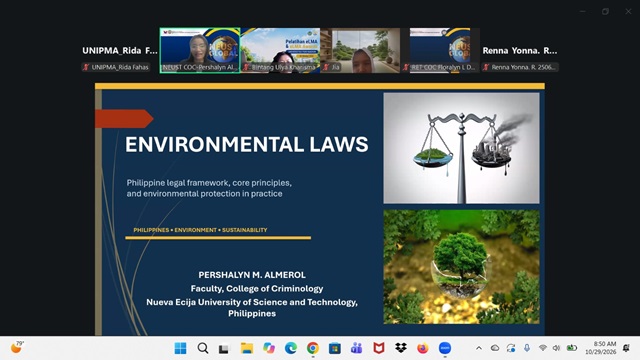
Based on a report submitted to the Public Relations Team by Rida Fahas, M.Pd., the academic discussion was divided into two main topics, each offering in-depth analytical perspectives. In the first session, Pershalyn M. Amerol examined environmental regulations in the Philippines through a presentation entitled “Environmental Laws: Philippine Legal Framework, Core Principles, and Environmental Protection in Practice.” The discussion explored how fundamental environmental law principles are enforced, providing students with valuable insights to compare the effectiveness of environmental legal instruments in Indonesia and the Philippines.
In the second session, Floralyn Laconsay D. presented “Criminal Laws in Philippine Setting and The Digital Legal Ecosystem.” This session stimulated participants’ critical thinking as they examined how conventional criminal law must keep pace with emerging forms of crime driven by the rapid development of the modern digital ecosystem.
Rather than relying solely on one-way lectures, the forum was designed to encourage dynamic interaction through question-and-answer sessions. Students were encouraged to examine differences in legal approaches and sharpen their analytical skills in responding to law enforcement challenges across different jurisdictions.
This progressive initiative by FH UNIPMA is expected to serve as a catalyst for producing law graduates who are not only knowledgeable within their domestic legal environment but also adaptive, critical-minded, and prepared to navigate the complexities of the legal profession in an increasingly interconnected global era. Continued collaboration with NEUST Philippines is also expected to generate further academic innovations that make tangible contributions to improving the quality of higher education.