Graduating 1,619 Students, UNIPMA Rector Encourages Graduates to Be Competitive and Make a Positive Impact
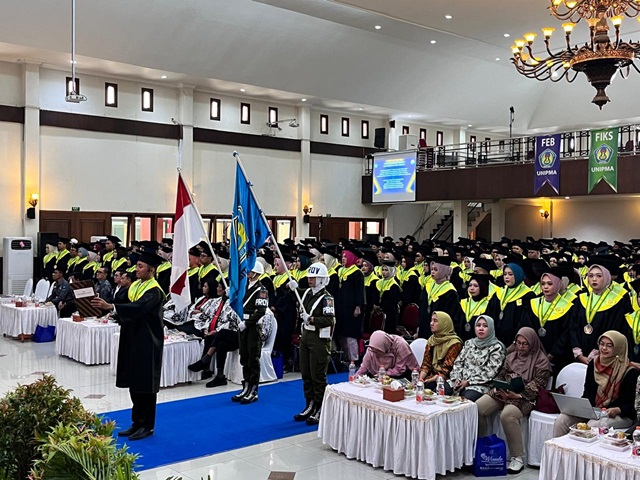
UNIPMA — Increasingly intense competition in the job market requires university graduates to possess more than just a degree. Professional competencies, technological skills, and the ability to identify opportunities are essential assets for entering the workforce and creating employment opportunities. These challenges are a key focus for Universitas PGRI Madiun (UNIPMA) as it prepares 1,619 graduates who are being conferred their degrees at the 2026 Fifth Diploma III Graduation Ceremony and the 19th Undergraduate and Graduate School Graduation Ceremony.
The graduation ceremonies will be held in two sessions, on October 28 and 31, 2026, at the Graha Cendekia Building, UNIPMA. Hundreds of graduates have achieved cum laude honors, marking an important academic accomplishment before entering the professional world or pursuing further career development.
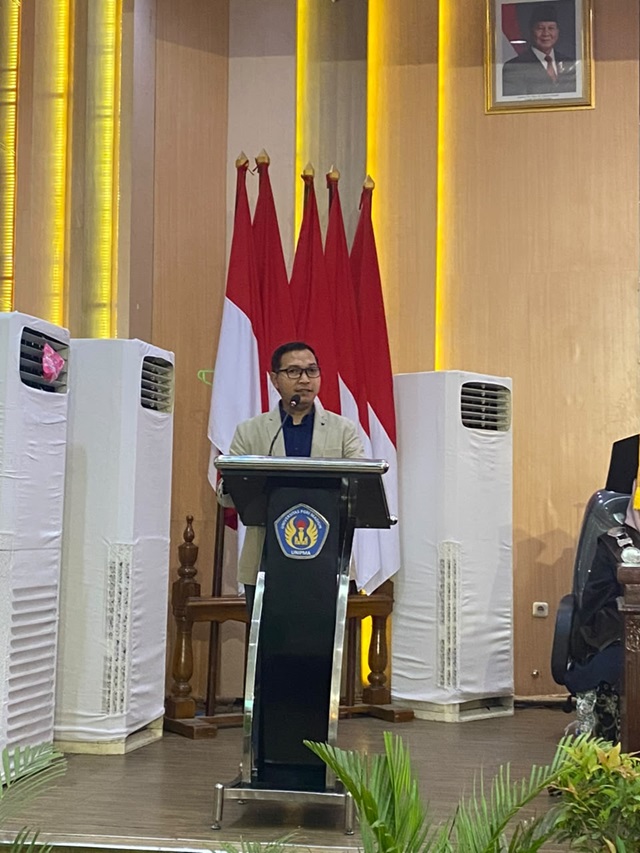
UNIPMA Rector Dr. H. Supri Wahyudi Utomo, M.Pd., emphasized that higher education institutions must do more than equip students with academic knowledge. Universities must also ensure that their graduates possess skills relevant to the demands of the workforce.
“We encourage and require students to take competency assessments. At least one competency certification has been integrated into our academic activities. However, students may also pursue additional certifications beyond those required by the university,” he stated.
Strengthening these competencies has become increasingly important amid changing industry demands and rapid technological advancements, including artificial intelligence (AI). This technology is increasingly being adopted across various professional fields, making it essential for students to understand how to use it to improve productivity and support task completion.
Nevertheless, Dr. H. Supri Wahyudi Utomo, M.Pd., reminded graduates that technological proficiency must go hand in hand with responsibility. The use of AI must comply with applicable ethics and norms. Rather than replacing critical thinking, human involvement, or user accountability, technology should serve as a tool to improve the quality of work.
In addition to preparing graduates to compete in the job market, UNIPMA encourages its alumni to make tangible contributions to society. According to Dr. H. Supri Wahyudi Utomo, M.Pd., higher education institutions play a strategic role in supporting regional development, particularly across the Greater Madiun area. Waste management and improvements in human resource quality are two issues requiring attention and the involvement of various stakeholders, including academics.
This commitment will be strengthened through the Community Service Program (Kuliah Kerja Nyata/KKN). UNIPMA is currently preparing a KKN scheme targeting the city of Madiun, with a focus on community-based waste management. Through this program, the university aims to introduce creative ideas, innovations, and technological applications that residents can use to manage waste in their respective neighborhoods.
According to Dr. H. Supri Wahyudi Utomo, M.Pd., the program represents one way higher education institutions can contribute to addressing real-world challenges in society. UNIPMA is currently making preparations, including conducting surveys and securing the necessary permits. Students are expected to participate in the upcoming KKN period, around December 2026 to January 2027.
These efforts are also aligned with ongoing discussions between UNIPMA and the Acting Mayor of Madiun regarding opportunities for higher education institutions to contribute to regional development. Through direct community engagement, the university is expected not only to produce qualified graduates but also to provide solutions to various challenges in the surrounding community.
Amid the growing number of graduates from universities across the country, securing employment has become a challenge in its own right. Therefore, UNIPMA alumni are expected to possess added value through their competencies, creativity, and ability to adapt to changing industry demands.
“We hope UNIPMA graduates will be able to compete with graduates from other universities. However, students should not simply wait for job opportunities. They must be able to identify opportunities and create jobs of their own,” he emphasized.
This message is particularly directed at diploma and undergraduate graduates, encouraging them not to stop at academic achievement alone. The knowledge and skills acquired during their studies should be applied to building careers, developing personal potential, and creating business opportunities.
Through competency development, responsible technology adoption, and active participation in community development, UNIPMA hopes that its 1,619 graduates in 2026 will become competitive alumni who also make a positive impact on their communities and regions.