UNIPMA Holds Internal Monitoring and Evaluation, 12 Researchers Present DPPM 2026 Research
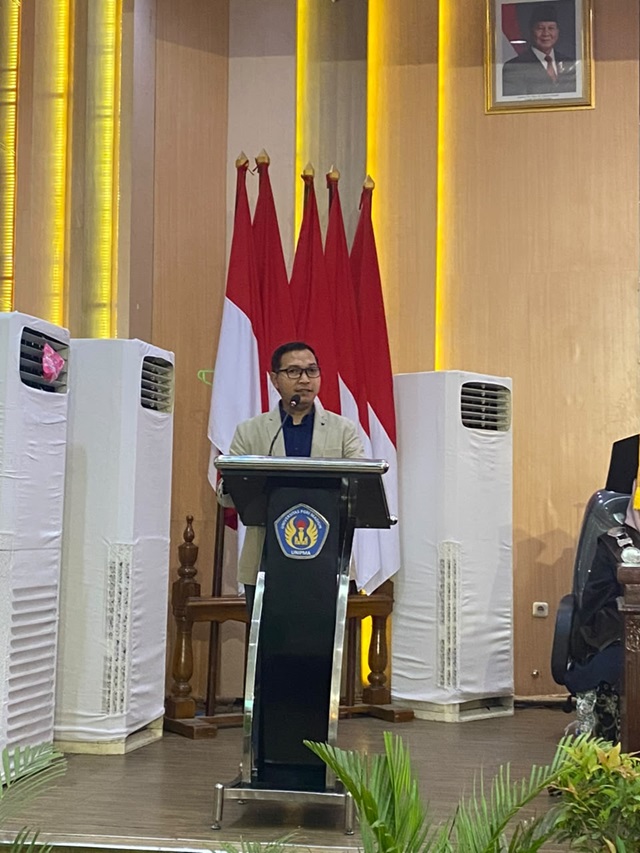
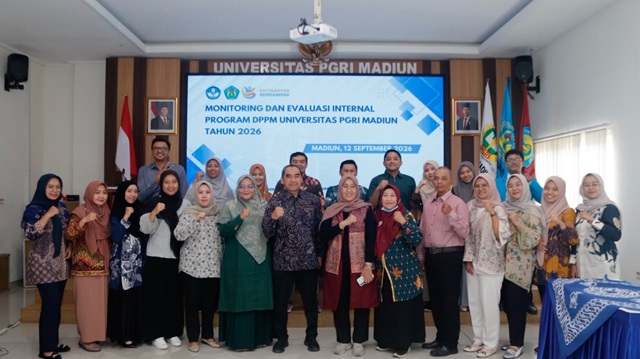
UNIPMA — Universitas PGRI Madiun (UNIPMA), through the Institute for Research and Community Service (LPPM), held an internal Monitoring and Evaluation (Monev) of the 2026 DPPM Research and Research Downstreaming Program at the UNIPMA Integrated Laboratory on Saturday (12/9), yesterday. A total of 12 researchers presented their research progress to receive evaluations and feedback from internal reviewers.
According to a report submitted by the Head of LPPM UNIPMA, Dr. Pujiati, S.Si., M.Si., to the public relations team, the Monev aimed to review the progress of research and research downstreaming programs while providing recommendations for improvement to ensure more effective implementation.
“This monitoring and evaluation was conducted to review, evaluate, and assess the progress of research and research downstreaming programs,” she said.
The first session featured Ir. Ani Sulistyarsi, M.M., M.Si., with research entitled Development of the e-Plantasia Mobile App for Mapping Plant Diversity in the Madiun Residency and Developing Local Potential-Based Conservation Strategies. The research was evaluated by Prof. Boge Triatmanto, S.E., M.M., and Prof. Marheny Lukitasari.
Next, Dr. Apt. Vevi Maritha, M.Farm., presented research on metabolite biomarkers for authenticating the halal status of chicken meat through metabolomics and machine learning. Dr. Ir. Nur Ihda Farikhatin Nisa, S.T., M.T., then presented modeling and simulation of a communal wastewater treatment plant using ASM in GPS-X. Both studies were reviewed by Prof. Boge Triatmanto, S.E., M.M., and Prof. Marheny Lukitasari.
Dr. Pujiati, S.Si., M.Si., subsequently presented research on the isolation of indigenous fungi from agricultural soil as candidates for bioremediating pesticide residues.
The education field was represented by Dr. Wasilatul Murtafiah, S.Pd., M.Pd., through two studies: the integration of AI-DPL based on the e-IM3 model to improve elementary students’ numeracy skills, and AR e-IM3 Mobile Learning to strengthen decision-making skills in numeracy literacy. Both studies were evaluated by Prof. Boge Triatmanto, S.E., M.M., and Prof. Dr. Bambang Eko Hari Cahyono, M.Pd.
Next, Desi Nuzul Agnafia, M.Pd., presented sustainable environmental learning based on EthnoSTEAM and AI-Lestariku. Prof. Dr. Bambang Eko Hari Cahyono, M.Pd., presented research on revitalizing Magetan Regency folklore as teaching material for writing imaginative narrative texts. Meanwhile, Pratiwi Novitasari, M.Pd., presented the PBL-ETNOSMAT model based on traditional gamelan to improve junior high school students’ critical thinking skills. All three received evaluations from Prof. Boge Triatmanto, S.E., M.M., along with the respective reviewers.
Ririn Setyowati, M.Pd., then presented the development of iCoD based on augmented reality to improve elementary students’ numeracy skills. Prof. Marheny Lukitasari presented the development of Mobile Virtual Reality media based on STEM-DT to foster students’ growth mindset.
The final session featured Dr. Samsul Arifin, S.Pd., M.Pd., with the development of an artificial intelligence-integrated Moral IQ application to improve the personality competencies of prospective teachers. The reviewers for the final three sessions included Prof. Boge Triatmanto, S.E., M.M., and Dr. Wasilatul Murtafiah, S.Pd., M.Pd.
The Monev concluded after all research projects had been presented and evaluated. The activity was part of LPPM UNIPMA’s efforts to monitor research progress while identifying feedback for the next stage of research.